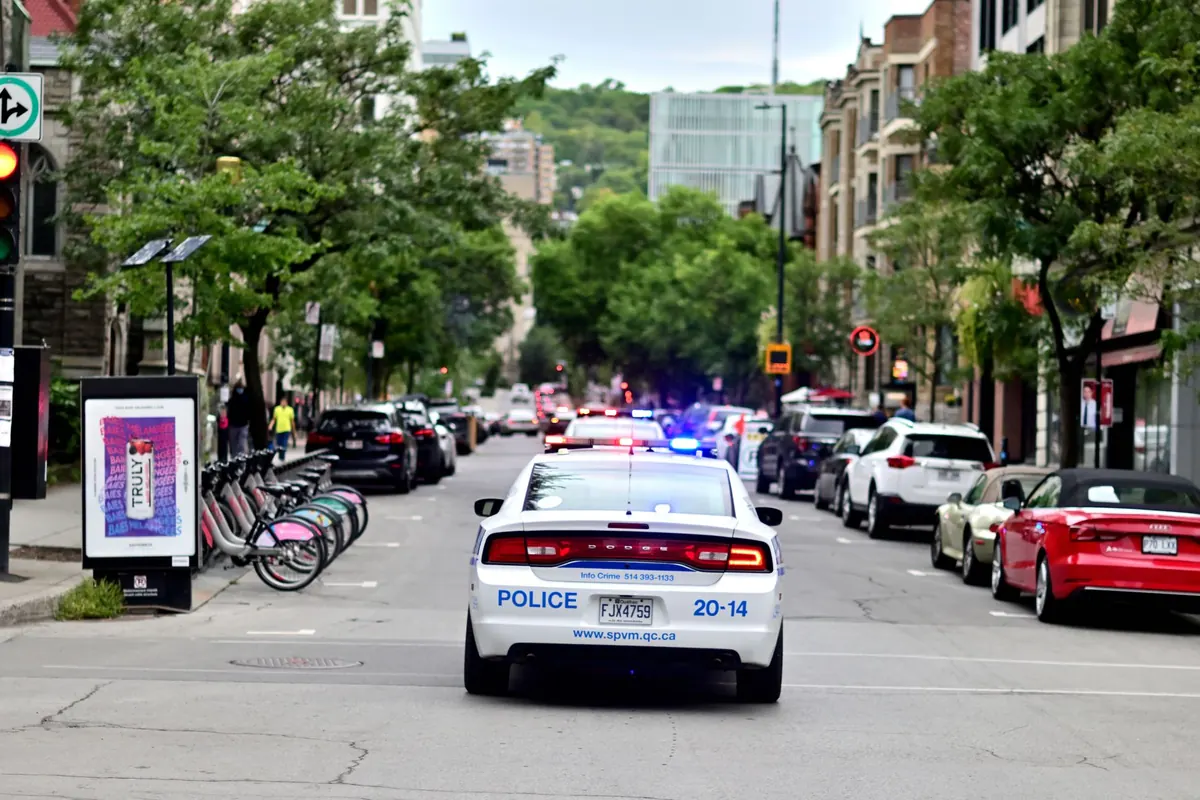
You are walking home from the bus stop when two people start shouting. Then one grabs a bag, shoves the other against a shop window and runs. Four seconds, maybe five, and the street goes quiet again. What you do in the next few minutes matters — to the person sitting on the pavement, and to a police file that may stay open for months.
This guide is for the bystander, not the hero. It covers how to stay out of harm's way, which number to call, what to write down before you forget it, and how to give a statement in an Italian police station without wasting an afternoon or losing your nerve. It is general information, not legal advice: if a case involves you directly, speak to a lawyer.
Start with your own safety
The instinct to step in is decent, and often unhelpful. Unless someone's life is in immediate danger and you can act without risking your own, keep your distance. A second injured person does not help the first, and it turns a witness into a patient.
Stand where you can see and be seen, ideally with other people around, and keep a mental note of where the exits are. Do not chase anyone who runs off: you do not know whether they are armed, and you will remember a licence plate far better from where you are standing. If you are in a car, pull over properly before you do anything else — a witness parked across a junction creates a second emergency.
If someone is hurt, say so clearly when you call. You are not generally obliged as a private citizen to report every crime you see, but failing to help a person in danger can itself be an offence in Italy, and it is the part of this that carries real weight.
Who to call, and what to say
Italy's emergency numbers are straightforward once you know them. If you are unsure, dial 112 and let the operator route you.
- 112 — the single European emergency number, now the standard across Italy. It covers police, ambulance and firefighters.
- 113 — the Polizia di Stato operations room, still in use and useful for non-urgent police matters.
- 118 — medical emergencies, when someone needs an ambulance.
- 115 — Vigili del Fuoco, for fire, gas leaks, people trapped.
- 117 — Guardia di Finanza, for smuggling, counterfeiting and financial crime.
- 1530 — emergencies at sea, run by the Guardia Costiera.
- 114 — the Emergenza Infanzia line, for emergencies involving children.
When someone answers, lead with the address. Street, number, town, and a landmark if the number is not obvious: "Via Roma 40, davanti alla farmacia, secondo piano." Then say what is happening, how many people are involved, whether anyone is armed, whether anyone is injured, and whether the attacker is still there. Give your name and a phone number, and stay on the line until you are told to hang up. If you are in a car, the plate and direction of travel are worth more than a description of the driver's jacket.
If your Italian is shaky
Say which language you speak, slowly. Emergency centres can often arrange interpretation, and for a formal written statement you have the right to understand every word you are signing — an interpreter can be provided. Nobody will think less of you for asking.
What to notice while you wait
Most of what you saw will be gone from memory within a couple of hours, so capture it early. Useful details include:
- The time, as precisely as you can — check your phone, not your memory.
- The exact spot, including which side of the street and which shop or doorway.
- How many people, and each person's role: who did what to whom.
- Height, build, hair, clothing, and anything that stands out — a limp, a tattoo, a distinctive bag, an accent or dialect.
- Vehicles: make, colour, and even a partial plate. Two or three characters can be enough.
- What was said, if you heard it, and in what language.
- What was taken or damaged, and which direction the person left in.
- Cameras: shop CCTV, bank ATMs, doorbells, and anyone else who was watching.
Write it into your phone notes immediately, while you are still standing there if it is safe. Include your own position. If you saw it from across the road, an investigator needs to know that before weighing your description of a face.
Giving a statement: denuncia, querela, and what happens at the station
There are two things people mix up. A denuncia is a report of a crime, and you can normally file one at a Carabinieri station or at the Questura — the local police headquarters — even if the crime happened elsewhere; phone first and ask where to go. A querela is a formal complaint for offences that are prosecuted only if the victim asks, and those have strict deadlines, often measured in months. If you are the victim rather than a bystander, do not sit on it while you decide.
As a witness you will usually be asked for sommarie informazioni: a summary taken by an officer, written down and signed by you. A few habits make this go better.
- Read everything before you sign, line by line. Ask for anything unclear to be corrected.
- Never fill a gap with a guess. "Non sono sicuro" is a complete and credible answer.
- Say what you actually saw, not what you concluded. "He was holding something dark" beats "he had a knife" if you did not see a blade.
- Ask for the officer's name and the report number, and ask how you can get a copy.
- If you might be involved yourself, say so at once and ask for a lawyer before going further.
You may be contacted again later, and in a serious case you can be called to testify in court as a testimone. Keep your notes — dated, unedited — and take them with you if that day comes.
Photos and videos: useful, but handle them carefully
Filming from a safe distance can genuinely help an investigation. Posting the same clip publicly before investigators have it can contaminate a case, expose the victim, and put you in the middle of an argument you did not ask for. Send the original file — not a cropped, filtered or re-saved version — and mention it to the officer taking your statement so they can tell you how to hand it over. Keep a backup and do not delete the original from your phone.
Follow-up: paperwork, support, and your own week
Ask three questions before you leave the station: what is the report number, which office is handling it, and who you should contact if you remember something else. Write the answers down. If you were the victim, ask about the Sportello di ascolto per le vittime di reato — victim support desks, often at the courthouse or run by associations — and about legal aid if you cannot afford a lawyer. If you were injured or your property was damaged, ask what documentation your insurer will want.
Witnessing violence is a stressor, even when you were never in danger. Trouble sleeping, replaying the moment, or feeling oddly guilty are common reactions. Talk to someone, note it with your doctor if it persists, and ask the officer or a victim support service about psychological help for witnesses. There is no prize for coping alone.
A short checklist you can keep
- Move to safety. Do not intervene or chase.
- Call 112, or 118 if someone is hurt. Give the address first.
- Note time, place, people, vehicle, direction, cameras — in your phone, immediately.
- Help the person affected if it is safe, and stay until told you can go.
- Go to the Carabinieri or Questura to file a denuncia, or a querela if you are the victim and deadlines apply.
- Read your statement before signing. Correct it. Ask for the report number.
- Hand over footage in its original form; do not publish it first.
- Keep your notes, take down names and numbers, and look after yourself afterwards.
None of this requires courage of the dramatic kind. It requires a clear head, a phone, and ten minutes of attention — which is, more often than not, exactly what the person on the pavement needs from you.
Photo: Yvon Gallant / Pexels